
The Punishment of the Proud in Purgatory
The Divine ComedyThe purgation of pride on the first terrace, where souls carry heavy stones and learn humility.
increasing Bearing strength in each event
 decreasing
Bearing strength in each eventdecreasingThe Sculptures of Humility
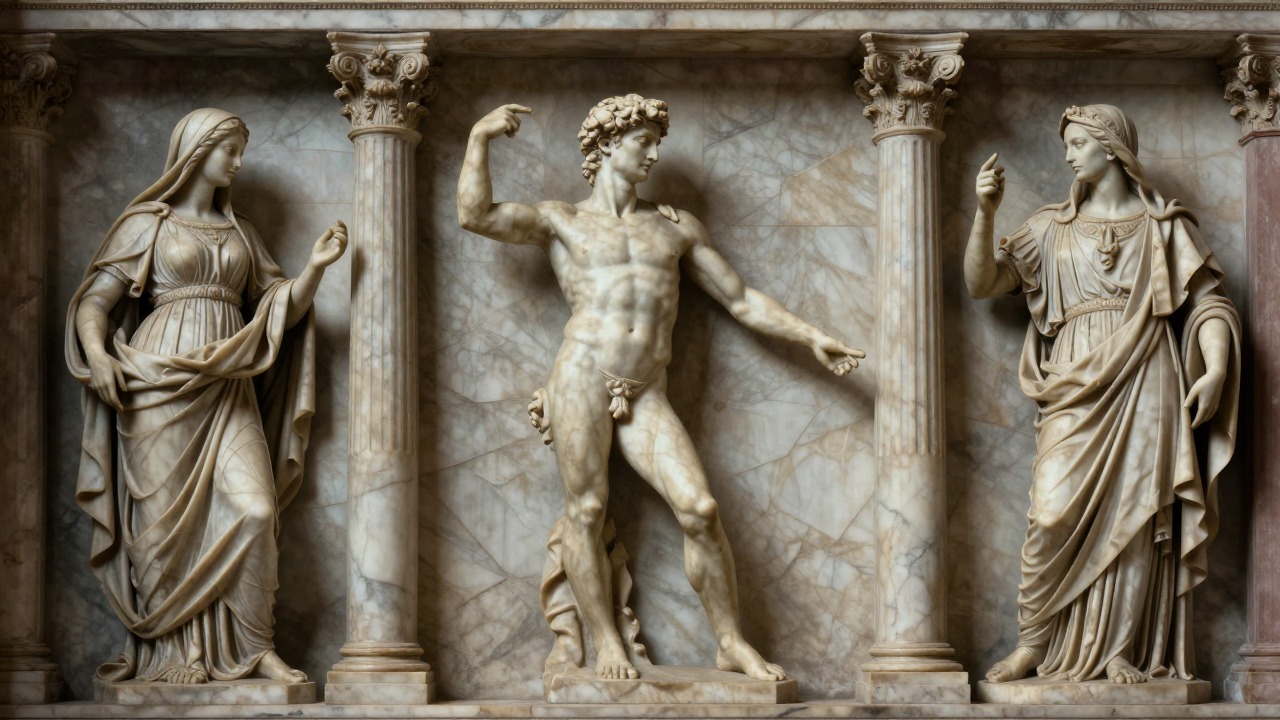
The Marble Carvings
The Examples
Dante sees exquisite marble carvings on the wall depicting humility: the Annunciation, David dancing before the Ark, and Emperor Trajan and the widow.
The Purpose
These images are meant to inspire humility in the proud souls. They are so lifelike that they seem real.
The Bent Souls
The Heavy Burden
The Stones
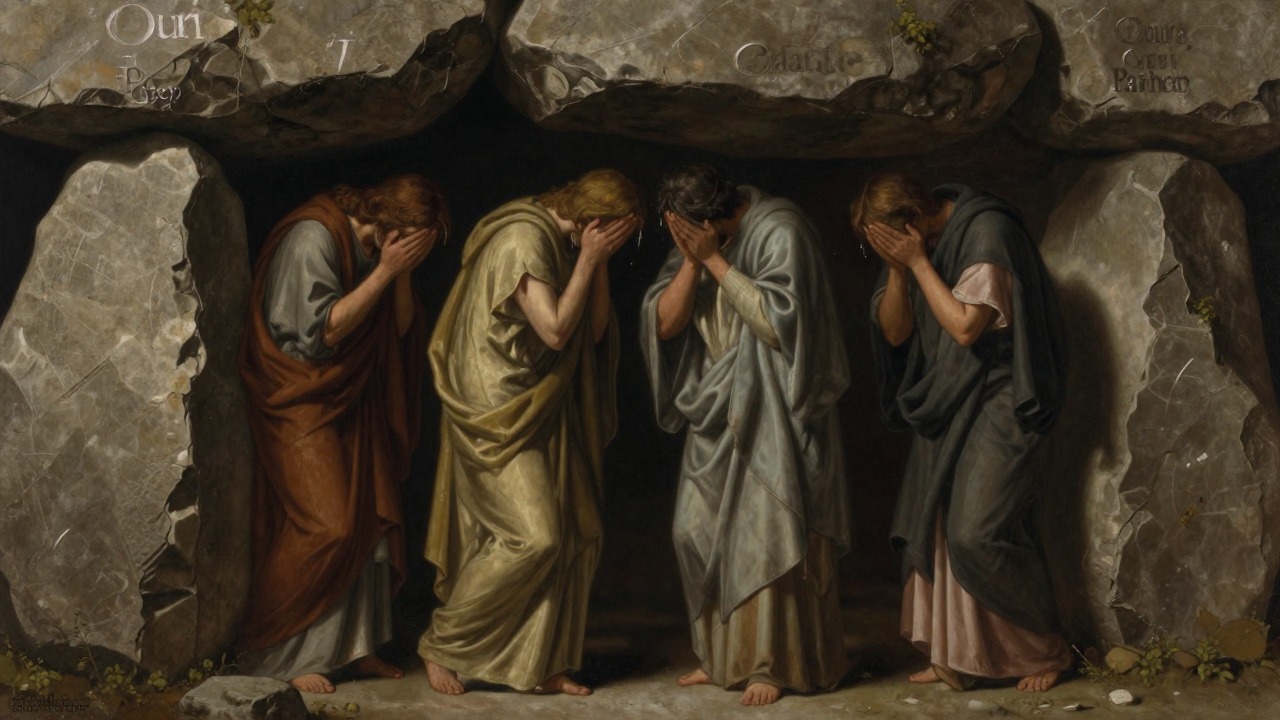
The proud walk bent under huge stones, which press them down. They are like corbels supporting a roof. Their faces are hidden, and they weep.
The Prayer
They recite the 'Our Father' as they walk, asking for humility. The weight of the stones corresponds to their earthly pride.
Omberto di Santafiore
The Arrogant Noble
The Confession
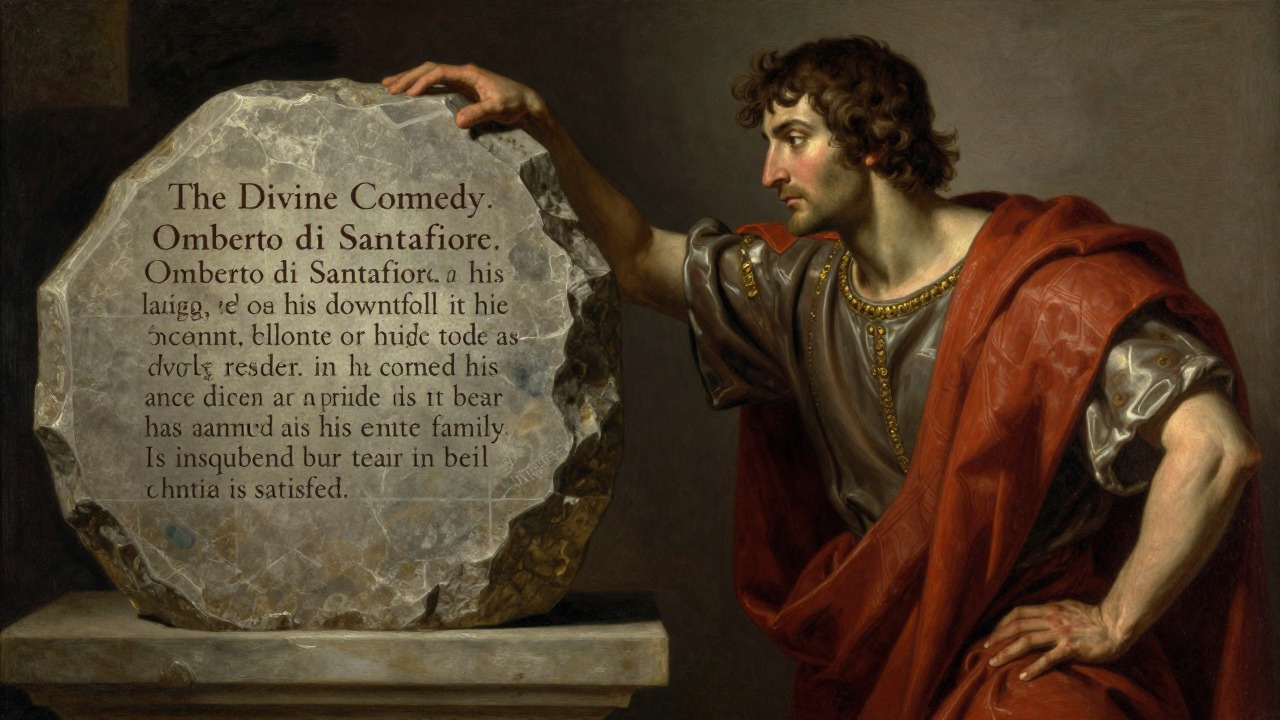
Omberto, a nobleman, admits that his pride in his lineage led to his downfall. He scorned all men and died as a result.
The Lesson
He warns Dante against pride, saying it has harmed his entire family. His punishment is to bear the stone until God is satisfied.
Oderisi d'Agobbio on Fame
The Vanity of Art
The Illuminator
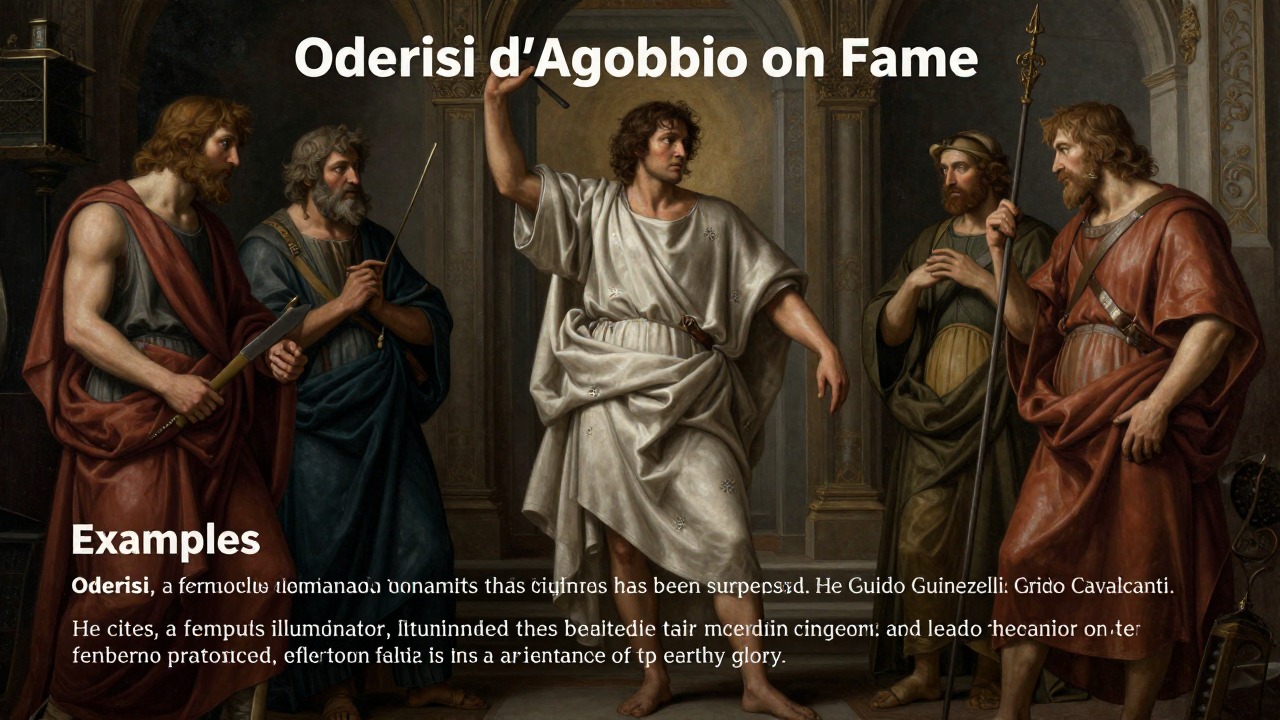
Oderisi, a famous illuminator, laments that his fame has been surpassed. He reflects on the transience of earthly glory.
The Examples
He cites Cimabue and Giotto, and the poets Guido Guinizelli and Guido Cavalcanti. He predicts that Dante himself will be surpassed. This humbles Dante.
Provenzan Salvani's Humility
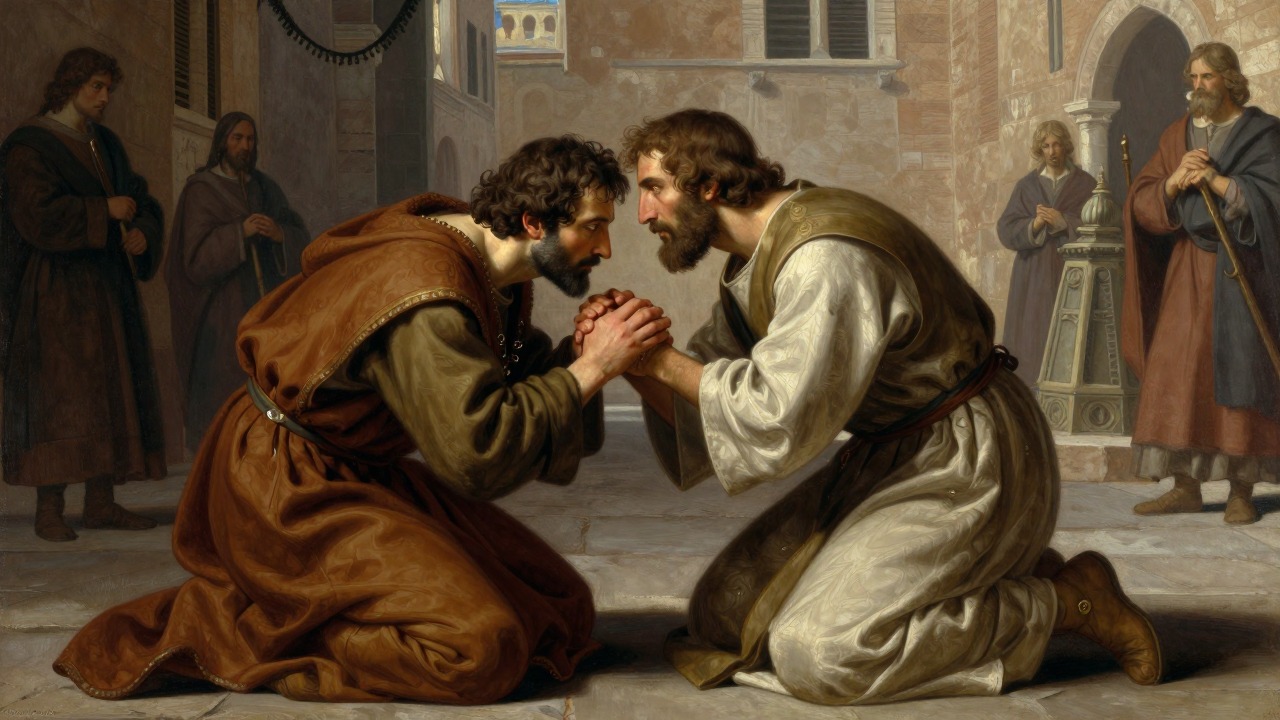
The Great Act
The Begging
Provenzan Salvani, once the proud lord of Siena, humbled himself by begging in the public square to ransom a friend. This act of humility saved him from a long wait in Ante-Purgatory.
The Lesson
Dante learns that a single act of profound humility can shorten purgatorial time. Pride can be overcome by self-abasement.
On the first terrace of Purgatory
On the first terrace, after the sculptures
On the first terrace, during the walk
On the first terrace, after Omberto
On the first terrace, after Oderisi
